

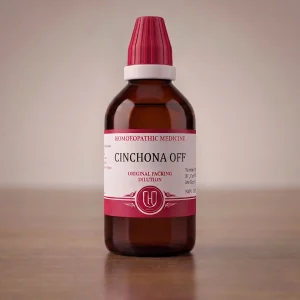


CINCHONA OFFICINALIS (CHINA) (PERUVIAN BARK)
40.00৳ – 120.00৳ Price range: 40.00৳ through 120.00৳
- Drug Nomenclature: Cinchona officinalis (or China officinalis)
- Common/Vernacular Names: Peruvian Bark, China, Jesuit’s Bark
- Botanical Family: Rubiaceae
- Primary Miasmatic Affinity: Psora, Sycosis, and Syphilis
Key Product Highlights
✓ Supports rapid recovery from debilitating diseases and cellular revitalization following
loss of vital body fluids.
✓ Highly useful in managing flatulent dyspepsia with heavy bloating, flatulence and belching
of the entire abdomen.
✓ Relieves periodic, neuralgic headaches and intermittent fevers with distinct stages.
✓ Effectively addresses chronic, painless, exhausting diarrhea accompanied by undigested
stools.
✓ Assists in checking active capillary bleeding, epistaxis, and hemoptysis.
✓ Helpful in relieving extreme hypersensitivity of the nervous system to light touch or drafts.
✓ Useful in intermittent fevers (malarial-type) and exhaustion after pneumonia/influenza
✓ Beneficial in hemorrhagic tendencies and passive bleeding
✓ Helpful in neuralgic pains and hypersensitivity
✓ Prepared strictly in accordance with Homoeopathic Pharmacopoeial standards
More Products from This Brand

CINCHONA OFFICINALIS (CHINA) (PERUVIAN BARK)
40.00৳ – 120.00৳ Price range: 40.00৳ through 120.00৳
- Description
- Key Benefits
- Spheres of Action & Modern Pharmacological
- General Indication & Clinical Indication
- Homoeopathic Profile (Guiding Symptoms)
- Potency Guidelines, Precaution & FAQ
- References
- Store Policies
- Inquiries
Description
Overview/ Product Highlights (Benefits and Features)
Cinchona officinalis holds an monumental position in history as the foundational remedy that led Dr. Samuel Hahnemann to the discovery of Homoeopathy in 1790. Within Homoeopathic literature, it is recognized for its specific, profound affinity for the blood, vegetative nervous system, and metabolic processes. Prepared from the dried bark of the tree, this medicine Acts profoundly upon cellular composition, gastrointestinal systems, and the vital fluids of the organism to restore systemic tone, reverse debilitating weakness.
China MT has an extensive sphere of action on the vascular system, hepatic-splenic matrix, digestive tract, and cerebrospinal axis. It is primarily indicated for states of severe exhaustion, debility, and dehydration resulting from the excessive loss of vital fluids—such as hemorrhages, profuse suppuration, excessive lactation, diarrhea, or semen losses.
The drug has proven its therapeutic worth in chronic intermittent fevers (such as malaria), periodicity-related neuralgia, extreme flatulent dyspepsia, and post-operative gas pains. It acts as an excellent anti-periodic, splenic alterative and may resemble as natural hemostatic. Research has shown that it possesses profound anti-pyretic, anti-malarial, and anti-plasmodial properties. The active alkaloidal constituents, principally quinine, quinidine, cinchonine, and cinchonidine, act as natural cellular modulators. Recent studies have also validated its significant anti-inflammatory, antioxidant, and membrane-stabilizing characteristics, making the entire matrix of the drug highly beneficial for reversing states of vital drain, severe anemia, and gastrointestinal fermentation.
Historically established as the original proven remedy of Homoeopathy and systematically evaluated through extensive pathogenetic trials recorded in Hahnemann’s Materia Medica Pura, it stands out as an indispensable vitalizing agent. It addresses states of profound nervous prostration, relieves localized congestive headaches, and restores health during long-lasting convalescence from acute draining illnesses.
Key Benefits
- Targeted Vital Force Restoration: Acts as an unmatched therapeutic stabilizer for general
prostration, building up cellular resistance after debilitating fluid depletion. - Vital Fluid Restoration: Acts as an excellent tonic for debility following the loss of vital
fluids—whether from excessive hemorrhage, diarrhoea, lactation, or suppuration. - Gastrointestinal and Fermentation Regulation: Facilitates the immediate reduction of gas
production, relieving the severe, tight distension of the abdomen that is unmitigated by
eructation or passing flatus. - Anti-Periodic Stabilization: Restores the biological rhythm of the vital force by breaking
the fixed, periodic return of neuralgias, chills, and fevers. - Vascular Matrix and Hemostasis: Exerts a clear dynamic action on the vascular network
to check active, dark or bright-red capillary oozing, reducing secondary tinnitus and vertigo
caused by blood loss. Checks passive hemorrhages from various orifices and corrects
haemorrhagic tendencies. - Nervine Desensitization: Soothes the hyper-excited nervous system where the skin is
painfully sensitive to light touch, yet relieved by hard, steady pressure. - Febrile Conditions: Effective in intermittent fevers, particularly where the paroxysms are
characterized by chill, heat, and sweat . - Nutritional and Anabolic Support: Traditionally considered beneficial where weak
digestion and poor assimilation contribute to chronic chlorosis, anemia, tissue wasting, and
slow convalescence.
Available Pack Size
- Mother Tincture (MT): 30 ml, 100 ml, 450 ml
- Dilutions/Potencies: 30 ml
Composition
- For Mother Tincture (MT): Each ml contains Cinchona officinalis dried bark (Drug
strength 1/10) matching Homoeopathic Pharmacopoeia of India (HPI) standards.
Alcohol Content
- Mother Tincture (MT): High-grade pure extra neutral alcohol (ENA) base, approximately
70% to 80% v/v. - Dilutions: Approximately 90% v/v dispensing alcohol base.
Spheres of Action
- Vascular System & Blood Compositions: The primary seat of action. It alters the vital equilibrium of blood cells, correcting anemia, active capillary hemorrhages, and posthemorrhagic cellular collapse.
- Gastrointestinal Tract: Exerts a powerful dynamic action on the gastric and intestinal mucosa, resolving fermentation, paretic flatulence, and deficient digestive enzyme assimilation.
- Hepato-Splenic Matrix: Acts profoundly upon the liver and spleen, resolving structural congestion, hypertrophy (splenomegaly), and post-malarial cachexia.
- Nervous System & Cerebrospinal Axis: Influences sensory nerve endings and brain centers, resolving extreme hyperesthesia, neuralgias, and congestive tinnitus.
- Thermoregulatory Centers/ Febrile States: Acts profoundly upon the vital heat mechanisms to control paroxysmal intermittent fevers.
Pharmacology & Phytochemistry
The Homoeopathic pathogenetic profile of Cinchona officinalis correlates directly with its rich complex chemistry. The bark contains high concentrations of quinoline alkaloids, bitter glycosides, and organic tannins.
Major Phytoconstituents
- Quinoline Alkaloids (Quinine, Quinidine, Cinchonine, Cinchonidine)
- Quinovic Acid & Cinchotannic Acid
- Bitter Glycosides (Cinchonin)
- Flavonoids
Modern Pharmacological Actions
Experimental and clinical screenings support its traditional and Homoeopathic usage:
- Anti-Plasmodial & Anti-pyretic Activity: Quinine acts as a direct schizonticide against intra-erythrocytic malaria parasites by disrupting heme detoxification, validating its Homoeopathic anti-periodic profile.
- Gastrointestinal Bitter Tonic Effect: Low-dose phytoconstituents stimulate gustatory receptors, reflexively increasing salivary, gastric, and hepatic secretions to improve weak assimilation.
- Membrane Stabilizing & Anti-inflammatory: Experimental pharmacological studies of quinidine demonstrate membrane-stabilizing activity. Quinidine decreases myocardial and peripheral membrane excitability by blocking sodium channels, explaining its action on neuralgic hyperesthesia.
- Antioxidant & Free Radical Quenching: Demonstrates significant radical scavenging capability in standard biochemical assays, supporting cellular protection during chronic wasting illnesses.
- Antimalarial Activity: Historically used as the source of quinine for malaria treatment Anti-inflammatory Properties
General Indication
- Profound, trembling weakness and singing in the ears (tinnitus) following severe loss of body fluids like blood/ hemorrhage, sweat, semen, lactation or long-lasting diarrhea.
- Exhaustion following acute illnesses (pneumonia, influenza)
- Extreme flatulent distension of the entire abdomen, where the belly feels tight and packed with gas, but passing flatus or belching provides no relief.
- Intermittent neuralgias or fevers that return with strict mathematical periodicity every 7, 14, or 21 days, accompanied by intense thirst during the sweat stage.
- Intermittent fevers (ague, malarial fevers)
- Diarrhea with gas and bloating
- Neuralgic pains with hypersensitivity
- Haemorrhagic tendencies
Clinical Indication
Gastrointestinal System:
- Diarrhea: Diarrhea with gas and bloating
- Flatulence: Flatulence with belching and distension
- Irritable Bowel Syndrome: Found useful in IBS according to CCRH studies
- Gastroenteritis
- Paediatric Diarrhea
- Dyspepsia, meteorism, and lienteric diarrhea
Febrile Conditions:
- Intermittent fevers (Malaria) and post-febrile cachexia
- Exhaustion After Fevers: Debility following pneumonia and influenza
Others
- Post-hemorrhagic anemia and vital fluid debility
- Periodical supra-orbital and facial neuralgias
- Splenomegaly (enlarged spleen) and hepatic engorgement
- Tinnitus aurium and vertigo from vascular depletion
- Chronic suppuration and protracted convalescence
Homoeopathic Profile (Guiding Symptoms)
As per Homoeopathic Materia Medica
- Mind: Marked by a gloomy, discouraged, and highly sensitive disposition. The patient is full of idealistic, unfulfilled plans in the evening, feels unappreciated, and is intensely irritable, anxious, and stubborn.
- Head: Heavy, throbbing, congestive headache where the skull feels as if it would burst. The sensation is of blood rushing to the head, heavily worsened by light touch, moving the eyes, or a draft of air, and significantly relieved by hard, steady pressure or binding the head tightly.
- Gastric System: Appetite is variable or entirely lost, with a bitter taste in the mouth. Constant satiety; the patient feels full up to the throat after taking a single bite of food. The entire abdomen is bloated with gas, causing flatulent colic that forces the patient to bend double. Stools are painless, loose, brownish, mixed with undigested food particles, and highly exhausting, worse at night and after eating fruit.
- Urinary System: Scanty, dark urine with brick-dust sediment consisting of excess urates during febrile states.
- Nervous & Musculoskeletal Systems: Intense hyperesthesia of the skin; the slightest touch of clothing or a hair triggers excruciating neuralgic pains, but hard pressure is comforting. Darting, tearing pains in limbs. Joints feel weak, trembling, and give way, accompanied by a heavy, empty sensation in the spine.
- Fever: Classic intermittent paroxysms. The chill stage begins with icy coldness of the limbs, without thirst. The heat stage is intense, long-lasting, with burning skin and red face. The sweat stage is profuse, debilitating, and accompanied by intense thirst. Keynote: The patient must be completely covered in all stages, yet the sweat stage drains the vital force.
Red-Line Homoeopathic Keynotes
- The “Debility from Fluid Loss” State: Profound, dynamic, trembling weakness accompanied by cold sweat, pale face, and ringing in the ears due to an absolute depletion of vital fluids.
- Total Abdominal Bloating with Zero Relief: Excessive accumulation of gas filling both the upper and lower abdomen, making it look like a drum; belching or passing flatus brings no relief whatsoever; worse after eating .
- Hyperesthesia to Light Touch vs. Hard Pressure: Excessive sensitiveness of the skin and affected parts to the lightest touch or a draft of air, whereas firm, hard, steady hand pressure provides relief.
- Strict Periodicity of Symptoms: Pains, neuralgias, or fever paroxysms return with absolute precision at regular intervals (e.g., every alternate day, or weekly).
- Painless, Undigested, Exhausting Night Stools: Frequent, gushing, painless diarrhea containing undigested food particles, which completely prostrates the patient, worse at night.
- Intermittent Fever: Fever with characteristic chill, heat, and sweat stages.
- Diarrhea with Gas and Bloating: Loose stools accompanied by flatulence and abdominal distension.
- Ringing in Ears (Tinnitus): A characteristic symptom of Cinchona/quinine toxicity .
- Rush of Blood to Head: Flushing of face with heat of cheeks and coldness of the rest of the body
Dosage and Administration
- Adults: 5–15 drops in $\frac{1}{4}$ cup of water, 2–3 times daily, or as directed by a qualified Homoeopathic physician.
Potency Guidelines
- Mother Tincture (MT): Indicated for immediate post-hemorrhagic collapse, chronic splenomegaly, flatulent dyspepsia, and as a material builder or bitter tonic.
- 3X to 6X: Chosen for physical muscular weakness, lienteric diarrhea, and lingering liver congestion.
- 30C to 200C: Indicated for high-grade neuralgias, acute malarial fever cycles, severe sensory hyperesthesia, and deep constitutional miasmatic corrections.
Safety Information
- Carefully read the product label before using.
- Keep out of the reach and sight of children.
- Store in a cool, dry place away from direct sunlight, strong aromatic compounds (such as
camphor, menthol, or musk), and electromagnetic fields.
Side Effects
- Generally non-toxic and free from adverse reactions when taken in recommended potentized Homoeopathic micro-doses or standard diluted mother tincture frameworks.
- Unusually large, unmitigated doses of the raw mother tincture/ crude drug/ extract may cause temporary mild “cinchonism” symptoms, including ringing in the ears (tinnitus), temporary buzzing in the ears, mild headache, or gastric heat due to the concentrated presence of natural
alkaloids.
Contraindication
(Based on established pharmacological literature for crude extract/Mother Tincture forms)
- ❌ High-Grade Cinchona/Quinine Hypersensitivity: Strictly contraindicated in individuals with a verified history of systemic hypersensitivity to quinine or other Rubiaceae alkaloids.
- No absolute contraindications reported in Homoeopathic literature for potentized
preparations . Take consultation of qualified Homoeopathic physician if you have- - Active Gastric Ulceration: Crude mother tincture formats should be avoided or used with extreme caution in acute gastrointestinal ulcers due to tannin-mediated irritation.
- Concurrent Anticoagulant Therapy: Crude forms may interact with blood thinners due to secondary vascular signaling mechanisms.
Precaution
- Carefully read the product label before using.
- Keep out of the reach and sight of children.
- Store in a cool, dry place away from direct sunlight, strong aromatic compounds, and electromagnetic fields.
- Maternal Use: For the intake of potentized preparations during pregnancy or lactation, women should seek a formal clinical evaluation from a registered professional Homoeopath before starting therapy. Avoid self-medication with Mother Tincture during pregnancy because traditional herbal literature reports uterine activity.
- Lactation: Consult a healthcare practitioner prior to use if you are breastfeeding.
- Oral Hygiene: Maintain a clean mouth environment; avoid consuming food, drinks, or brushing teeth for at least 15 to 20 minutes before and after taking the medicine.
- Alcohol Sensitivity: Individuals with verified alcohol sensitivity or liver restriction protocols should avoid liquid drops and receive the medicine exclusively via sucrose globules or lactose tablets.
- If symptoms persist for more than 3-5 days or worsen, discontinue use and consult a
health professional.
Frequently Asked Questions (FAQs)
- Is China safe for children?
Yes. Homoeopathic preparations are safe when prescribed by a qualified practitioner. It is effective in treating children after acute diarrhea or for weak, anemic, pale children. Always consult a qualified Homoeopathic practitioner. - Is Cinchona officinalis the same as quinine?
Cinchona bark is the natural source of quinine. In Homoeopathy, the potentized preparation is used rather than crude quinine, making it well tolerated when prescribed appropriately.. - How long should I take Cinchona officinalis?
Use until symptoms are relieved or as directed. If symptoms persist for more than 3-5 days or worsen, discontinue use and consult a health professional - Can China help with anxiety?
China addresses an anxious, fearful state of mind that is directly associated with physical depletion, structural blood loss, or severe nervous exhaustion (brain-fag). - Is it safe during pregnancy?
Mother Tincture/extract is not recommended. Traditional sources recommend consulting a healthcare practitioner prior to using potentized medicine during pregnancy. Always seek professional Homoeopathic advice. - Can China be taken for a long time?
In Homoeopathic preparations, especially in potencies, it can be taken safely under professional supervision. Continuous long-term use of the crude mother tincture is not
advised without medical tracking. - Why is Cinchona historically important in Homoeopathy?
It is the first drug ever proven by Dr. Samuel Hahnemann. After translating William Cullen’s Materia Medica, Hahnemann ingested Cinchona bark himself, developed true malarial symptoms, and deduced the law of Similia Similibus Curentur (“Like Cures Like”). - How does China help in cases of insomnia?
Homoeopathically, it resolves sleeplessness caused by an overactive mind full of plans in the evening, or when insomnia stems from physical exhaustion, dynamic blood loss, and extreme nervous sensitivity.
Expert Opinion / Homoeopathic Stalwart’s / Doctor’s Note
Dr. Samuel Hahnemann (Materia Medica Pura) describes-
Cinchona bark is the noble substance that birthed the Homoeopathic art. It cures states that mimic its own pathogenetic expression: periodic fevers, severe digestive flatulence, and the profound, trembling weakness that follows the loss of the vital humors of the human body.
Dr. William Boericke (Manual of Materia Medica) describes-
Under China officinalis: A debility from exhausting discharges, from loss of vital fluids, together with a nervous erethism, calls for this remedy. Periodicity is most marked… Flatulence, distressing bloating of anything eaten
Dr. J.T. Kent (Lectures on Homoeopathic Materia Medica) describes-
China represents a state of total sensitive irritability. The patient is sensitive to light, touch, noise, and motion, entirely worn out by hemorrhages or prolonged diarrhea. The flatulence is immense, the whole abdomen is full, and the patient finds no relief from eructations.
References
- Hahnemann, S. (1811). Materia Medica Pura. Dresden.
- Boericke, W. (1927). Pocket manual of Homoeopathic materia medica. Boericke & Runyon.
- Kent, J. T. (1905). Lectures on Homoeopathic materia medica. Boericke & Tafel.
- Government of India. (1971). Homoeopathic Pharmacopoeia of India (HPI), Volume I.
Ministry of Health and Family Welfare. - Allen, H. C. (1899). Keynotes and characteristics with comparisons of some of the leading
remedies of the materia medica. Boericke & Tafel.
Disclaimer: This information is for educational and professional reference purposes only and does
not constitute medical advice. Please consult a qualified Homoeopathic practitioner for personalized
treatment. Homoeopathic medicines should be used as per the advice of a registered medical
practitioner. The indications, doses, and safety information are based on available Homoeopathic
literature and traditional knowledge; individual patient assessment is essential for safe prescribing.
General Inquiries
There are no inquiries yet.
Reviews
There are no reviews yet.