
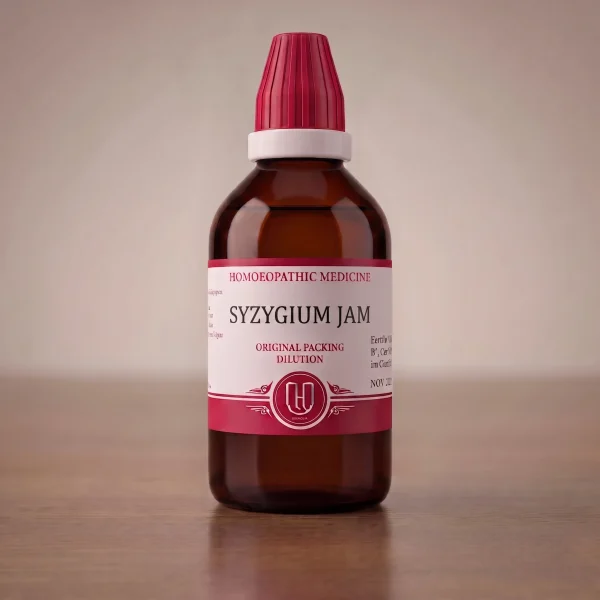



SYZYGIUM JAMBOLANUM
150.00৳ Original price was: 150.00৳ .120.00৳ Current price is: 120.00৳ .
- Drug Nomenclature: Syzygium jambolanum (Synonym: Eugenia jambolana, Syzygium
cumini) - Common/Vernacular Names: Jambul, Black Plum, Java Plum, Jamun
- Botanical Family: Myrtaceae
- Primary Miasmatic Affinity: Psora and Syphilis
Key Product Highlights
✓ Supports healthy blood glucose regulation
✓ Useful in diabetes mellitus with sugar in urine
✓ Reduces polyuria, polydipsia, and polyphagia
✓ Helps in weight management and obesity
✓ Addresses diabetic complications
✓ Relieves burning sensation in diabetes
✓ Useful in urinary disorders
✓ Promotes metabolic stabilization and aids in reducing excess sugar excretion in the urine.
✓ Supports rapid recovery and cellular tissue repair in indolent diabetic ulcers and
carbuncles.
✓ Relieves severe, distressing itching and irritation (pruritus) of the skin associated with
metabolic imbalances.
✓ Prepared strictly in accordance with statutory Homoeopathic Pharmacopoeial standards.
More Products from This Brand

SYZYGIUM JAMBOLANUM
150.00৳ Original price was: 150.00৳ .120.00৳ Current price is: 120.00৳ .
- Description
- Key Benefits
- Spheres of Action & Modern Pharmacological
- General Indication & Clinical Indication
- Homoeopathic Profile (Guiding Symptoms)
- Potency Guidelines & Precaution
- Frequently Asked Questions (FAQs) & References
- Store Policies
- Inquiries
Description
Overview/ Product Highlights (Benefits and Features)
Syzygium jambolanum holds a distinguished position in Homoeopathic literature as the most
important remedy for diabetes mellitus . Prepared from the seeds and bark of the Jamun tree, this
medicine acts profoundly on the pancreatic function, carbohydrate metabolism, and urinary system
to restore glycemic equilibrium, correct metabolic errors, and alleviate the debilitating symptoms of
diabetes.
It has been valued for its role in managing blood sugar levels. In homoeopathy, Syzygium
jambolanum is used to support pancreatic function, regulate glucose metabolism, and alleviate
symptoms associated with diabetes. It is also employed to address conditions related to excessive
thirst and urination.
It acts profoundly upon the vegetative nervous system and the glandular matrix of the pancreas to
restore metabolic equilibrium, decrease unnatural, insatiable thirst, and combat the profound cellular
emaciation that accompanies chronic nutrient loss.
Research has demonstrated that Syzygium jambolanum Homoeopathic formulations (MT, 30c, and
200c) contain gallic acid and ellagic acid as major phytochemicals and possess remarkable antiglycation properties, inhibiting the formation of advanced glycation end-products (AGEs) that are
responsible for diabetic complications. Modern studies have confirmed its efficacy in improving
glycaemic control, insulin sensitivity, and metabolic health.
Historically established through focused clinical provings and extensive clinical verifications
compiled by prominent authorities like Dr. William Boericke, Dr. J.H. Clarke, and Dr. Edwin Hale,
it stands as an indispensable vitalizing agent that stabilizes fluid balance, promotes the healing of
indolent ulcers, and prevents the progressive decline of vital force caused by metabolic depletion.
Key Benefits
- Glycemic Regulation: Acts as a potent antidiabetic agent, significantly reducing fasting
blood glucose, HbA1c, and improving overall glycaemic control . - Metabolic Restoration: Improves lipid profile by reducing total cholesterol and
triglycerides while increasing HDL cholesterol; modulates adipogenic genes (C/EBPα and
PPARγ) . - Anti-glycation Action: Inhibits protein glycation and formation of AGEs, maintaining
structural and functional integrity of albumin through anti-oxidative mechanisms . - Pancreatic Protection: Protects pancreatic β-cells from oxidative damage, preserves insulin
function, and improves glycaemic regulation . - Urinary Symptom Relief: Addresses profuse, pale urine with high specific gravity; reduces
frequency and burning sensation. - Fluid Balance Optimization: Facilitates a rapid reduction in the frequency and volume of
excessive urine, while simultaneously quenching the intense, burning thirst that characterizes
cellular dehydration. - Dermal Tissue Protection: Exerts a powerful dynamic healing effect on the skin, effectively
controlling chronic, painful itching and preventing the development of gangrenous or slowhealing metabolic ulcers. - Nervine Desensitization: Soothes peripheral nerve irritations and the heavy, weary, or
drowsy sensations in the limbs caused by poor carbohydrate utilization.
Available Pack Size
- Mother Tincture (MT): 30 ml, 100 ml, 450 ml
- Dilutions/Potencies: 30 ml
Composition
- For Mother Tincture (MT): Each ml contains Syzygium jambolanum fresh seeds/bark
(Drug strength 1/10) matching the technical standards of the Homoeopathic Pharmacopoeia
of India (HPI).
Alcohol Content
- Mother Tincture (MT): High-grade pure extra neutral alcohol (ENA) base, approximately
65% to 75% v/v. - Dilutions: Approximately 90% v/v dispensing alcohol base.
Spheres of Action
- Pancreatic & Glandular System: The primary center of action. It modifies and stimulates
pancreatic cell responses, regulating endocrine equilibrium and carbohydrate processing.
Regulates pancreatic function, insulin secretion, and carbohydrate metabolism. - Renal and Urinary System: Acts profoundly upon the renal epithelium and glomerular
filtration network to reduce the transit of unassimilated sugars and manage excessive fluid
output. - Metabolic Framework: Influences lipid metabolism, glycoprotein synthesis, and energy
utilization. - Integumentary System (Skin): Influences cellular nutrition in the dermis, arresting
suppurative tendencies, carbuncles, and metabolic pruritus. - Nervous System: Addresses diabetic neuropathy and associated symptoms.
- Nutritional Pathways: Corrects systemic wasting, cellular malnutrition, and abnormal
moisture depletion across mucosal surfaces.
Pharmacology & Phytochemistry
The Homoeopathic pathogenetic profile of Syzygium jambolanum correlates closely with its rich,
natural chemical defense matrix located within the seeds and inner bark.
Major Phytoconstituents
- Glycosides: Jambolin (antimyellin) and Antimellin, which possess distinct properties that
help inhibit the conversion of starch into sugar in vitro. - Polyphenols & Tannins: Ellagic acid, gallic acid, corilagin, and 3,6-di-O-galloylglucose.
- Alkaloids: Jambosine.
- Flavonoids: Quercetin, kaempferol, and myricetin.
- Anthocyanins: Delphinidin, Petunidin, Malvidin-diglucosides
- β-sitosterol.
Modern Pharmacological Actions
Experimental screenings and modern bioassays validate its traditional and Homoeopathic profile:
- Anti-glycation Activity: Homoeopathic formulations (MT, 30c, 200c) significantly inhibit
glycation compared to aminoguanidine, maintaining structural and functional integrity of
albumin. Surface plasmon resonance (SPR) data showed that Syzyg formulations bind to
glycated human serum albumin with an equilibrium dissociation constant of 1.10 nM . - Antidiabetic Action: Syzygium jambolanum supplementation has been shown to reduce
fasting blood glucose and HbA1c levels; improves lipid profile, liver enzymes, renal markers,
and metabolic health - Alpha-Glucosidase and Alpha-Amylase Inhibition: Phytochemical constituents block
carbohydrate-digesting enzymes, delaying glucose absorption and reducing post-prandial
metabolic surges, validating its Homoeopathic profile for glycosuria. - Pancreatic Beta-Cell Protection: In-vivo assays indicate that seed extracts help reduce
oxidative stress in pancreatic islets, promoting tissue repair and supporting endogenous
metabolic regulation. - Hypolipidaemic Effect: Reduces total cholesterol, triglycerides, and LDL while increasing
HDL in diabetic models - Adipogenic Gene Modulation: Modulates C/EBPα and PPARγ (adipogenesis) and UCP1
(thermogenesis) pathways; leads to lower body weight, blood glucose, and total cholesterol . - Insulin Sensitivity Improvement: Comparable to metformin treatment in improving insulin
sensitivity - Antioxidant & Free Radical Quenching: High concentrations of ellagic acid and tannins
demonstrate significant DPPH radical scavenging activity, protecting peripheral vascular
tissues from advanced glycation end-products (AGEs). - Wound Healing Matrix Enhancement: Topical and systemic micro-doses stimulate
collagen synthesis and migration of fibroblasts, explaining its traditional Homoeopathic
clinical success in treating indolent diabetic ulcers.
General Indication
Based on Homoeopathic Materia Medica:
- Diabetes mellitus with sugar in urine
- Profuse, pale urine with high specific gravity
- Excessive thirst (polydipsia)
- Voracious appetite with emaciation (polyphagia)
- Burning sensation during urination
- Urinary tract infections
- Obesity and metabolic disorders
- General debility and weakness from diabetes
- Profound, progressive emaciation, extreme debility, loss of muscular power, and constant
drowsiness. - Severe, distressing pruritus of the skin, vulva, and vagina, worse from sugar-loaded urinary
irritation, often accompanied by a tendency to chronic papular eruptions, boils, and
carbuncles.
Clinical Indication
Diabetes Mellitus:
- Type 2 diabetes mellitus—significantly decreases fasting blood sugar and insulin resistance
- Improves glycaemic profile in newly diagnosed type 2 diabetics
- Reduces HbA1c and multiple biochemical markers linked to organ function
- Diabetic ulcers, carbuncles, and indolent boils
- Pruritus vulvae and diabetic dermatosis
Diabetes Mellitus:
- Obesity with weight gain and smaller adipose tissue weight
- Dyslipidemia—improves cholesterol levels
- Insulin resistance
Urinary System:
- Polyuria with high specific gravity
- Glycosuria
- Burning micturition
Liver and Metabolic Function:
- Improves liver enzymes (SGPT, SGOT)
- Enhances kidney function markers
- Polydipsia (excessive thirst)
- Metabolic emaciation and chronic nervous prostration
- Peripheral paresthesia and numbness associated with metabolic weakness
Homoeopathic Profile (Guiding Symptoms)
As per Homoeopathic Materia Medica-
- Mind: Characterized by mental depression, sluggishness, and a heavy, apathetic disposition.
The patient feels thoroughly discouraged due to chronic physical weakness and lacks the
mental energy for active exertion. - Head: Heavy, dull, stupefying headache with a constant desire to sleep. Sensation of heat
and pressure in the brain, heavily associated with gastric sluggishness and metabolic
imbalances. - Mouth & Throat: Intense, burning dryness of the mouth, tongue, and pharynx. The tongue
is often red, cracked, or coated with a thick, pasty mucus; the patient demands large quantities
of cold water at short intervals without lasting relief. - Gastric System: Appetite is either completely lost or perverted into a voracious, unnatural
hunger (bulimia) accompanied by immediate sinking weakness after eating. Great flatulent
accumulation in the stomach and intestines. Stools are frequent, loose, dark-colored, or
constipated with large amounts of gas. - Urinary System: Urine is passed in enormous quantities (polyuria), pale, of high specific
gravity, and heavily loaded with glucose (glycosuria). Urination is frequent, keeping the
patient awake all night. - Skin & Integument: The skin is dry, harsh, and completely devoid of healthy moisture.
Intolerable scratching or burning sensation over the entire body, especially about the vulva
and thighs from contact with urine. Small wounds, scratches, or insect bites display a marked
tendency to suppurate, inflame, and degenerate into deep, painless, or burning indolent
ulcers. - Extremities: Marked by a heavy, weary, trembling weakness in the lower limbs. Sharp,
pricking, needle-like pains or numbness in the fingers and toes, indicating peripheral nerve
distress from systemic malassimilation.
Red-Line Homoeopathic Keynotes
- The “Glycosuria, Polyuria with High Specific Gravity” State: Sudden and profuse
production of sugar-laden urine, accompanied by progressive loss of flesh and profound
systemic weakness. - Diabetes Mellitus with Sugar in Urine: The most important remedy for diabetes; “no other
remedy causes a marked degree diminution and disappearance of sugar in the urine” . - Polyphagia with Emaciation: Voracious appetite, constant hunger, yet progressive
emaciation and weakness. - Burning Sensation in Urination: Burning during micturition, often accompanied by urinary
tract infections. - Insatiable Thirst with Burning Dryness: An intense, unquenchable craving for large
quantities of water, accompanied by a dry, parched mouth and tongue that remains
unmitigated by drinking. - Metabolic Pruritus Vulvae: Distressing, severe, and relentless itching of the vulva and
upper thighs, triggered or severely worsened by the irritating passage of sugar-loaded urine. - Indolent, Non-Healing Carbuncles: Rapid development of deep-seated, dark-red, chronic
boils or carbuncles on the skin that refuse to suppurate healthily or heal, exhibiting a tendency
to slough. - Great Weakness with Constant Drowsiness: A state of overwhelming physical prostration
where the patient feels continuously exhausted, heavy, and drowsy, with a constant
inclination to sleep.
Dosage and Administration
- Adults: 5–15 drops in $\frac{1}{4}$ cup of water, 2–3 times daily, or as directed by a
qualified Homoeopathic physician.
Potency Guidelines
- Mother Tincture (MT): This is the most frequently employed form in Homoeopathic
practice for this specific drug. It is highly indicated in material doses (lower drops) to acts
profoundly as an organotrophic agent for reducing sugar excretion and quenching thirst. - 1X to 3X: Utilized for gradual metabolic stimulation, addressing peripheral numbness, and
supporting patients during lingering tissue repair. - 30C to 200C: Indicated for deep constitutional miasmatic correction, severe neuralgic
pricking, and balancing highly sensitive, reactive nervous states.
Safety Information
- Carefully read the product label before using.
- Keep out of the reach and sight of children.
- Store in a cool, dry place away from direct sunlight, strong aromatic compounds (such as
camphor, menthol, or musk), and electromagnetic fields.
Side Effects
- Generally non-toxic and free from any side effects when taken in recommended potentized
Homoeopathic micro-doses or standard diluted mother tincture frameworks. - No adverse structural toxicities have been reported across classical Homoeopathic literature.
Contraindication
(Based on established pharmacological literature for crude extract/Mother Tincture forms)
- ❌ Sudden Hyper-Acute Hypoglycemia: Crude or massive doses of the mother tincture
should not be administered during an active hypoglycemic crisis, as its primary action helps
down-regulate systemic glucose levels. - ❌ High-Grade Myrtaceae Hypersensitivity: Contraindicated in individuals with a rare,
verified history of systemic hypersensitivity to Jambul or related Myrtaceae family plants. - No absolute contraindications reported in Homoeopathic literature for potentized
preparations.
Precaution
- Carefully read the product label before using.
- Keep out of the reach and sight of children.
- Store in a cool, dry place away from direct sunlight, strong aromatic compounds, and
electromagnetic fields. - Maternal Use: For the intake of potentized preparations during pregnancy or lactation,
women should seek a formal clinical evaluation from a registered professional Homoeopath
before starting therapy. Avoid self-medication with Mother Tincture during pregnancy due
to traditional records regarding metabolic shifts. - Lactation: Consult a healthcare practitioner prior to use if you are breastfeeding.
- Oral Hygiene: Maintain a clean mouth environment; avoid consuming food, drinks, or
brushing teeth for at least 15 to 20 minutes before and after taking the medicine. - Blood Sugar Monitoring: When using Syzygium jambolanum Mother Tincture for
metabolic support, blood glucose levels must be monitored regularly. If used alongside
conventional antidiabetic medications, dosages may require professional adjustment to
prevent unexpected hypoglycemic shifts. - If symptoms persist for more than 3–5 days or worsen, discontinue use and consult a
health professional.
Frequently Asked Questions (FAQs)
- Can Syzygium completely cure long-standing diabetes?
In homoeopathy, Syzygium jambolanum acts as an exceptional organotrophic remedy that
helps regulate sugar metabolism, control polyuria, and manage secondary complications like
ulcers. Complete cure depends on individual constitutional factors, pancreatic reserve, and
miasmatic blocks. - Is it safe to take Syzygium MT along with allopathic insulin or tablets?
Yes, it can be safely used as a complementary therapeutic agent. However, close tracking of
blood sugar is mandatory, as the synergistic effect can lower glucose levels, requiring an
adjustment of conventional doses by your physician. - Can it replace conventional diabetic medication?
No. Homoeopathic remedies should not be used as replacement of conventional treatment by
self. Always consult a qualified Homoeopathic healthcare professional. - How long should I take Syzygium jambolanum?
Use as directed by a qualified Homoeopathic practitioner. For chronic conditions like
diabetes, long-term use under professional supervision may be recommended. - Is Syzygium jambolanum the same as Jamun?
Yes. Syzygium jambolanum is the botanical name for the Jamun or Java Plum tree. The seeds
and bark are used in Homoeopathic preparations. - Why is the seed extract preferred over other parts of the plant?
Homoeopathic drug provings and pharmacopoeial standards establish that the seeds contain
the highest concentration of active glycosides (jambolin) and anti-metabolic alkaloids,
providing the most reliable therapeutic response. - How long does it take to see a reduction in thirst and urination?
Clinical observations indicate that symptoms like intense thirst (polydipsia) and frequent
urination (polyuria) often begin to stabilize within 7 to 14 days of regular, regulated use of
the Mother Tincture.
Expert Opinion / Homoeopathic Stalwart’s / Doctor’s Note
Dr. William Boericke (Pocket Manual of Homoeopathic Materia Medica)
“A most useful remedy in Diabetes Mellitus. No remedy causes more marked degree of diminution
and disappearance of sugar in the urine. It has an immediate clinical relationship to glycosuria, large
amounts of urine, high specific gravity, and immense thirst.”
Dr. J.H. Clarke (Dictionary of Practical Materia Medica)
“Syzygium has a well-authenticated record in curing or greatly palliating cases of diabetes. It reduces
the quantity of urine, removes the sugar, and cures the distressing pruritus vulvae that occurs as a
secondary consequence of diabetic urine.”
Dr. Edwin M. Hale (Special Therapeutics of the New Remedies)
“This indigenous remedy acts specifically upon the nutrient assimilation of the pancreas. In cases of
carbohydrate breakdown, the tincture of the seed arrests the secondary fermentation processes within
the tissue matrix, acting as a true physiological anchor.”
References
- Boericke, W. (1927). Pocket manual of Homoeopathic materia medica. Boericke & Runyon.
- Clarke, J. H. (1902). A dictionary of practical materia medica. The Homoeopathic Publishing
Company. - Government of India. (1986). Homoeopathic Pharmacopoeia of India (HPI), Volume V.
Ministry of Health and Family Welfare. - Hale, E. M. (1875). Lectures on diseases of the heart / Special Therapeutics of the New
Remedies. Boericke & Tafel. - Allen, T. F. (1879). The encyclopedia of pure materia medica. Boericke & Tafel.
- Vermeulen and Bakker. Syzygium jambolanum monograph. Cited in Homoeopathic
literature for its use in diabetes mellitus . - Munta. (2008). Syzygium jambolanum in diabetes. Cited in Homoeopathic literature
- Bangar, N.S., Ravindran, S., Shaikh, S.A., Shah, N., Tupe, R.S. (2024). Homoeopathic
Formulations of Syzygium jambolanum Alleviate Glycation-Mediated Structural and
Functional Modifications of Albumin: Evaluation through Multi-Spectroscopic and
Microscopic Approaches. Homoeopathy, 113(2):98-111. DOI: 10.1055/s-0043-1771024. - Roy, A., et al. (2026). The Protective Effects of Syzygium Jambolanum Extracts on Diabetes.
Current Drug Discovery Technologies. DOI: 10.2174/0115701638414284251024094632. - Santos, S.H.S., Moreira, D.C., Guimarães, V.H.D., et al. (2022). Syzygium jambolanum
Homoeopathic Formulation Improves Diabetes Modulating Adipogenic Genes in DietInduced Obese Mice: Comparison to the Standard Metformin Treatment. Current Traditional
Medicine, 6. - Sahana, et al. (2010). Clinical study on type 2 diabetes mellitus patients with Syzygium
jambolanum. Cited in DUT thesis . - Schoenfelder, et al. (2010). Hypoglycaemic and hypolipidaemic effect of Syzygium
jambolanum on alloxan-induced rats. Cited in DUT thesis . - Baliga MS, et al. (2013). Scientific validation of the antidiabetic effects of Syzygium
jambolanum DC (black plum). J Altern Complement Med, 19(3):191-7. - Helmstadter A. (2008). Syzygium cumini (L.) SKEELS (Myrtaceae) against diabetes—125
years of research. Pharmazie, 63(2):91-101. - SBL India website.
Disclaimer: This information is for educational and professional reference purposes only and does
not constitute medical advice. Please consult a qualified Homoeopathic practitioner for personalized
treatment. Homoeopathic medicines should be used as per the advice of a registered medical
practitioner. The indications, doses, and safety information are based on available Homoeopathic
literature and traditional knowledge; individual patient assessment is essential for safe prescribing.
General Inquiries
There are no inquiries yet.

Reviews
There are no reviews yet.