
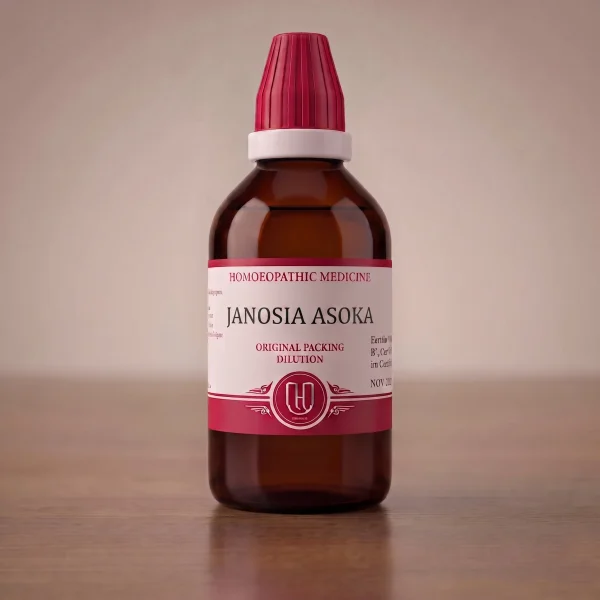

JANOSIA ASOKA (SARACA INDICA)
40.00৳ – 120.00৳ Price range: 40.00৳ through 120.00৳
Drug Nomenclature: Janosia asoka (or Saraca asoca / Saraca indica)
Common/Vernacular Names: Asoka, Ashoka, Bark of Ashoka Tree
Botanical Family: Caesalpiniaceae (Fabaceae)
Primary Miasmatic Affinity: Psora and Sycosis
Key Product Highlights
✓ Supports healthy uterine function and regulates the menstrual cycle.
✓ Highly useful in managing uterine engorgement, congestion, and hypertrophy.
✓ Relieves amenorrhea, menorrhagia, and irregular menstrual patterns.
✓ Effectively addresses reflex pelvic headaches and associated backaches.
✓ Assists in restoring strength during convalescence from chronic uterine discharge.
✓ Prepared strictly in accordance with Homoeopathic Pharmacopoeial standards.
More Products from This Brand
JANOSIA ASOKA (SARACA INDICA)
40.00৳ – 120.00৳ Price range: 40.00৳ through 120.00৳
- Description
- Key Benefits
- Spheres of Action & Modern Pharmacological
- General Indication & Clinical Indication
- Homoeopathic Profile (Guiding Symptoms)
- Potency Guidelines & Precaution & FAQ
- References
- Store Policies
- Inquiries
Description
Overview/ Product Highlights (Benefits and Features)
Janosia asoka is an extensively verified and highly valued indigenous remedy within Homoeopathic literature, recognized for its specific, profound affinity for the female reproductive system. Prepared from the fresh bark of the Ashoka tree, this medicine has marked affinity on the uterine tissue and endometrial lining to regulate menstrual cycles, helps in ovarian dysfunctions, and soothe pelvic congestion.
Janosia ashoka MT has extensive sphere of action on female organs. It is used in cases of amenorrhoea for regulating rhythm and flow, and metrorrhagia. Research has shown that it possesses oxytocic, stimulant, spasmogenic action on uterus; saracin is seen as immunomodulator, and the drug as a whole good for female reproductive system. Recent studies have found it to possess potent anti-helminthic activity.
Historically documented by pioneers of Indian Homoeopathy and verified through scientific drug provings by the Central Council for Research in Homoeopathy (CCRH), it stands out as a highly effective uterine tonic and alterative. It addresses states of uterine torpor, relieves localized reflex headaches, and restores vigor during states of general debility caused by chronic menstrual blood loss.
Key Benefits
- Targeted Uterine Hemostasis: Acts as an excellent therapeutic stabilizer for excessive uterine bleeding (menorrhagia and metrorrhagia), optimizing functional uterine contractions.
- Pelvic Congestion Alleviation: Reduces aching, heavy, or bearing-down sensations in the lower abdomen by resolving venous congestion within the pelvic floor.
- Menstrual Cycle Regulation: Restores the vital force during delayed, scanty, or suppressed menses (amenorrhea), especially when accompanied by reflex symptoms.
- Reflex Nervous Stabilization: Relieves secondary symptoms triggered by uterine disorders, such as congestive headaches, gastric irritability, and palpitations.
- Astringent and Strengthening: Acts as a refresher, retains complexion, and serves as an astringent and strengthening agent for the reproductive system
Composition
- For Mother Tincture (MT): Each ml contains Janosia asoka fresh bark (Drug strength 1/10) matching Homoeopathic Pharmacopoeia of India (HPI) standards.
- For Dilutions: Potentized Jonosia asoka liquid in specific Decimal and Centesimal scales dispensed in purified water and dispensing alcohol.
Alcohol Content
- Mother Tincture (MT): High-grade pure extra neutral alcohol (ENA) base, approximately 60% to 70% v/v.
- Dilutions: Approximately 90% v/v dispensing alcohol base.
Spheres of Action
- Female Reproductive System: The primary seat of action. It has marked affinity upon the muscular fibers of the uterus, the ovaries, and the pelvic vascular network, regulating tone and relieving structural congestion.
- Vascular Matrix & Blood: Exerts a distinct anti-hemorrhagic (hemostatic) action on the capillaries of the endometrium, checking passive tissue hemorrhages.
- Cerebrospinal Axis: Influences the nervous system, resolving reflex neuralgias, uterine headaches, and sympathetic emotional irritability.
- Urinary System: Acts mildly on the renal pelvis and bladder mucosa to relieve dysuria and irritation associated with pelvic congestion. Gastrointestinal System: Action on the digestive tract and haemorrhoidal vessels.
- Lower Abdomen and Pelvis: Direct action on pelvic organs and associated structures
Pharmacology & Phytochemistry
The Homoeopathic pathogenetic profile of Jonosia asoka correlates well with its complex natural chemistry. The bark contains high concentrations of tannins, catechol, sterols, and specific non-hormonal glycosides.
Major Phytoconstituents
- Major Phytoconstituents
- Tannins (condensed tannins)
- Catechol
- beta-sitosterol and stigmasterol
- Flavonoids and Leucoanthocyanidins
- Essential organic calcium and iron salts
Modern Pharmacological Actions
Experimental and clinical screenings support its traditional and Homoeopathic usage:
- Oxytocic & Utertonic Activity: Stimulates the myometrium directly, modulating uterine contraction patterns.
- Hemostatic effect: Tannins and associated organic compounds cause localized capillary constriction, managing excessive bleeding surfaces.
- Estrogenic Modulation: Plant sterols act as natural precursors to stabilize functional balance in the hypothalamic-pituitary-ovarian axis without synthetic side effects.
- Anti-inflammatory & Analgesic: Reduces prostaglandin pathways, lowering pelvic pain and smooth muscle spasms.
General Indication
- Delayed, scanty, or completely suppressed menstruation in young girls or women, accompanied by stubborn obstinate constipation.
- Excessive, prolonged, or frequent menstrual bleeding mixed with dark clots, leading to severe anemia and physical exhaustion.
- Sensation of an heavy weight, bearing-down, or aching soreness in the lower pelvic region and lower back.
Clinical Indication
- Amenorrhea (suppressed/delayed menses)
- Menorrhagia (excessive menstrual bleeding) and Metrorrhagia
- Dysmenorrhea (painful, spasmodic menstruation)
- Uterine Leucorrhea (thick, white or yellowish vaginal discharge)
- Reflex uterine headache (congestive vertex headache)
- Hemorrhoids (bleeding piles) associated with pelvic congestion
Homoeopathic Profile (Guiding Symptoms)
As per Homoeopathic Materia Medica
- Mind: Prone to variable moods during menstrual delays. Easily irritated by slight noise or disturbances.
- Head: Intense, throbbing, or congestive pain focused heavily at the vertex (top of the head) or occipital region. This headache is characteristically a reflex symptom of uterine irregularities, worsening with suppressed menses and improving significantly when blood flow begins.
- Gastric System: Loss of appetite, mild nausea, and a peculiar empty, sinking feeling in the epigastrium. Marked by obstinate, dry constipation with an ineffectual urge to pass stool, which is always worse prior to or during the menstrual phase.
- Urinary System: Frequent desire to urinate; urine is passed with burning, aching pain or in drops (strangury), often aggravated by pelvic pressure from an engorged uterus.
- Female Organs: Menses are thoroughly irregular—either delayed for weeks or months, or appearing too early and staying too long. Discharge varies from pale and watery to dark, thick, clumped blood. Dysmenorrhea is marked by severe labor-like, bearing-down pains in the hypogastrium that radiate down the thighs and into the lumbar spine. Leucorrhea is profuse, staining clothes, and is accompanied by general weakness.
- Back: Constant, dull, dragging ache across the sacrum and lumbar region. The patient feels completely exhausted, requiring firm back support or the need to lie down flat for temporary comfort.
Red-Line Homoeopathic Keynotes
- The “Menstrual Relief” Headache: Severe, congestive vertex headache that builds up persistently while the menses are delayed or suppressed, but vanishes almost entirely the moment the menstrual flow establishes itself.
- Spasmodic Bearing-Down with Lumbar Radiation: Violent, labor-like pains in the lower abdomen prior to the menstrual flow, radiating directly down the inner thighs and accompanied by an aching, weak spine.
- Concomitant Pelvic Constipation: Stubborn, dry, ineffectual constipation that worsens dramatically whenever uterine complaints or menstrual delays are prominent.
- Menstrual Irregularities: Irregular menses resulting in headache, throbbing sensation, palpitation, and pelvic pain with blackish discharge .
- Pre-menstrual Ovarian Pain: Pain in the ovaries before the start of menstruation, with painful thighs and abdomen; pain disappears while discharge flows .
- Dysmenorrhoea with Scanty/Foul Discharge: Watery or scanty discharge with foul odour, associated with constipation
Dosage and Administration
- Adults: 5–15 drops in $\frac{1}{4}$ cup of water, 2–3 times daily, or as directed by a qualified Homoeopathic physician.
Potency Guidelines
- Mother Tincture (MT): Most frequently indicated in classical literature for structural changes, heavy uterine bleeding, severe leucorrhea, and to initiate flow in obstinate amenorrhea.
- 3X to 6X: Used for mechanical or functional sub-involution of the uterus and chronic pelvic congestion.
- 30C to 200C: Indicated for reflex nervous symptoms, acute congestive headaches of uterine origin, and matching constitutional presentations.
Safety Information
- Carefully read the product label before using.
- Keep out of the reach and sight of children.
- Store in a cool, dry place away from direct sunlight, strong aromatic compounds (such as camphor, menthol, or musk), and electromagnetic fields.
Side Effects
- Generally non-toxic and free from adverse reactions when taken in recommended potentized Homoeopathic micro-doses or standard diluted mother tincture frameworks.
- Unnecessarily large, unmitigated doses of the raw mother tincture may cause mild temporary gastric irritation or nausea due to the high natural tannin content of the bark.
Contraindication
(Based on established pharmacological literature for crude extract/Mother Tincture forms)
- ❌ Pregnancy: Mother Tincture (MT)/ Extract/ Crude drug is strictly contraindicated due to its documented oxytocic and uterine-stimulating properties, which can induce unwanted uterine contractions.
- ❌ Mechanical Blockages: Not indicated as a primary solution for mechanical structural obstructions requiring surgical intervention, such as large obstructing fibroids or advanced uterine malignancies.
- ❌ Hypersensitivity: Avoid use if there is a known hypersensitivity to plants in the Caesalpiniaceae or Fabaceae families.
No absolute contraindications reported in Homoeopathic literature for potentized preparations.
Precaution
- Carefully read the product label before using.
- Keep out of the reach and sight of children.
- Store in a cool, dry place away from direct sunlight, strong aromatic compounds, and electromagnetic fields.
- Maternal Use: For the intake of potentized preparations during pregnancy or lactation, women should seek a formal clinical evaluation from a registered professional Homoeopath before starting therapy. Avoid self-medication with Mother Tincture during pregnancy because traditional herbal literature reports uterine activity.
- Lactation: Consult a healthcare practitioner prior to use if you are breastfeeding.
- Oral Hygiene: Maintain a clean mouth environment; avoid consuming food, drinks, or brushing teeth for at least 15 to 20 minutes before and after taking the medicine.
- Alcohol Sensitivity: Individuals with verified alcohol sensitivity or liver restriction protocols should avoid liquid drops and receive the medicine exclusively via sucrose globules or lactose tablets.
- If symptoms persist for more than 3-5 days or worsen, discontinue use and consult a
health professional.
Frequently Asked Questions (FAQs)
- Can Jonosia asoka be safely used for painful menses (dysmenorrhea) in young girls?
Yes. It is a highly effective remedy for young girls experiencing delayed or painful menses, especially when accompanied by lower backaches and stubborn constipation. Lower potencies or 30C are ideal under professional guidance. - How does Jonosia asoka check excessive menstrual bleeding?
Homoeopathically, it regulates the vascular tone of the uterine capillaries and smooth muscle fibers. By restoring balance to the dynamic vital force, it helps control abnormal, passive uterine congestion and bleeding. - Is there a specific time to stop the Mother Tincture during the cycle?
In cases of heavy menorrhagia, it is typically administered during the active bleeding phase. For amenorrhea, it is used to stimulate regular cycles. The dosage pattern should be carefully structured by a registered Homoeopath. - Can Jonosia Asoka help with infertility?
Has an extensive reputation in Indian medicine as a uterine tonic. Cultivated as an ornamental tree… Manufactured from the fresh bark. Highly useful in uterine affections, menstrual irregularities, amenorrhea, and metrorrhagia. Reflex headache from uterine pathology. Regular intake of this drug may help in conception of barren women. It is believed to strengthen the fallopian tubes to hold the ovum properly during ovulation. - What conditions is Ashoka used for in traditional medicine?
In Ayurveda and Siddha, it is used for dysmenorrhoea, amenorrhoea, metrorrhagia, menorrhagia, leucorrhoea, uterine disorders, bleeding piles, dysentery, internal haemorrhages, indigestion, fever, and colic
References
- Boericke, W. (1927). Pocket manual of Homoeopathic materia medica. Boericke & Runyon.
- Central Council for Research in Homoeopathy. (1995). Homoeopathic Drug Provings. CCRH Publications, New Delhi.
- Ghose, S. C. (1902). Drugs of Hindustan. Hahnemann Publishing Office, Calcutta.
- Government of India. (1971). Homoeopathic Pharmacopoeia of India (HPI). Ministry of Health and Family Welfare.
- Verma, P. N., & Vaid, I. (2002). Materia medica of common Homoeopathic remedies. Jain Publishers.
- Dr. Willmar Schwabe India website
Disclaimer: This information is for educational and professional reference purposes only and does not constitute medical advice. Please consult a qualified Homoeopathic practitioner for personalized treatment. Homoeopathic medicines should be used as per the advice of a registered medical practitioner. The indications, doses, and safety information are based on available Homoeopathic literature and traditional knowledge; individual patient assessment is essential for safe prescribing.
General Inquiries
There are no inquiries yet.


Reviews
There are no reviews yet.